

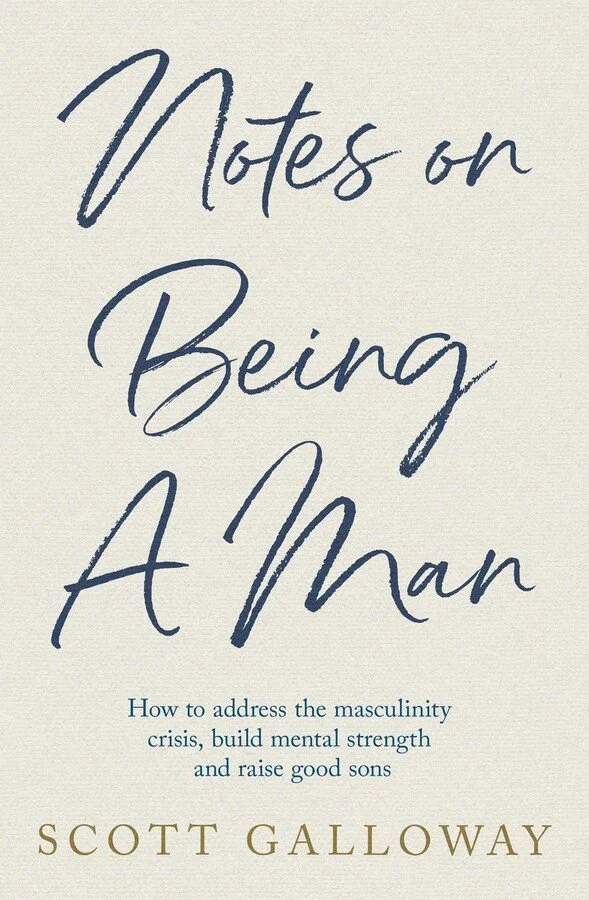
NOTES ON BEING A MAN by Scott Galloway
Rating: 4.75/10 reps
Categories: Society & History
There are a lot of people with opinions on being a man in the third decade of the second millennium in the Western world. Most of those opinions are bad, terrifying, unattainable, weird, or deeply conflicting.
TL;DR - This book is three books in one: research paper, memoir, and advice column… and all three are incomplete, poorly mixed with the others, and less than the sum of their parts.
Scott Galloway tries to write prescriptions on a wide spectrum of topics—from friendship, sex, and love to workouts, the workplace, and wardrobe choices—to provide guidance on navigating modern masculinity and channeling the power of testosterone for good. This is especially true regarding his focus on being a good provider, protector, and procreator. He gets a lot right, even in a glancing way, but the way he delivers it was something no one in our group fully enjoyed.
Some readers disliked the book so much they tapped out a third of the way in; one father of two boys, in fact, was among the harshest critics. Others liked it, while some felt it bore a spooky resemblance to their own childhoods and noted it would have been transformational had they read it in their late teens. But no man or woman in the group loved it.
A few common themes emerged in our feedback. We all agreed the book would have been better if Scott had dialed back the personal anecdotes, leaned heavier into the stats, and partnered with an "ologist" of some flavor—any flavor, really (even rainbow sherbet?). There is also a weird note about patriotism that feels entirely out of place. Yet, it must be said: Scott does get a lot right. We couldn’t actually point to a specific piece of advice that was wrong. Nevertheless, we settled on one conclusion: this book is like gas station sushi. It’s the healthiest option in the "book convenience store" of male advice—and that, my friends, is cause for despair. It is simply the best of a very bad bunch.
Scott tries his best to give back, but he seems to have trouble discerning the private from the public. Out of the genuine goodness of his heart, he mentors young men IRL. That’s a great thing, he should keep doing it and more people should join in. However, this book reads like a collection of lessons intended for those specific young men. Many of these nuggets of advice are based on Scott’s personal opinions, and not enough on research. In a private context, this kind of advice is likely highly effective; but when you broaden the scope to a general audience, it’s a whisper in a bullhorn. It just feels off and may not fully apply to the whole audience.
He’s right that modern men and boys often need tactical guidance or just any pro-social guidance in general, particularly given our current sociological snapshot. Many dudes feel unmoored in the choppy seas of 2020’s masculinity, which makes them prime targets for the Andrew Tates of the world. Galloway is doing his best, just as many are, but we couldn’t shake the feeling that this content performs much better as a one-on-one conversation than a widely distributed text. He didn’t do himself a favor by saying the book was easy to write either. This was a good effort, but not a bullseye. There should be less Galloway and more graphs in this. Please keep trying Scott—next time with a PhD buddy.